


What To Listen For In Music
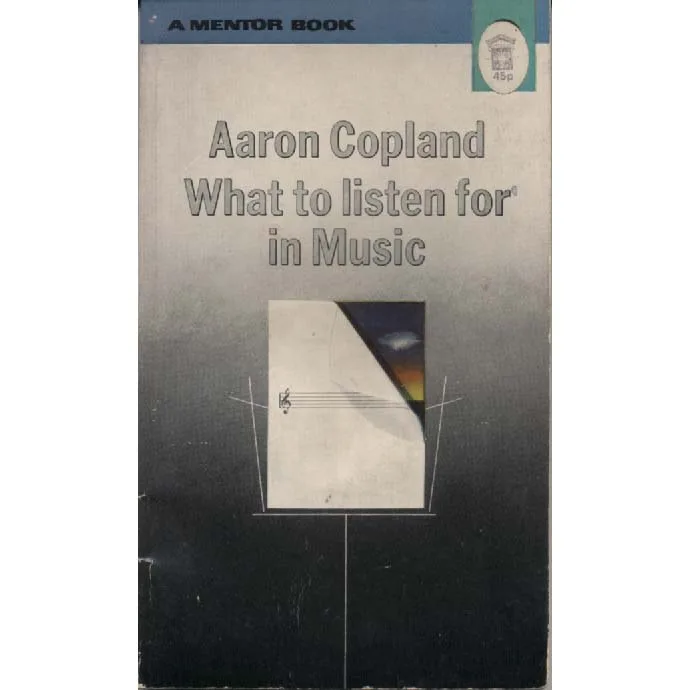
Publisher: Mentor
Format: Paperback
ISBN: none
Music has a long and rather unfair tradition of making people feel they ought to understand it better than they do. One is expected to nod gravely at a symphony, murmur something about texture or form, and avoid admitting that half the time one is simply hoping to recognise the tune when it comes back. Aaron Copland, mercifully, wrote What to Listen for in Music for exactly this predicament.
This is a book for the intelligent listener who suspects that music contains more than pleasant noise but would quite like someone to explain the machinery without turning the experience into homework. Copland, being both a major composer and a rare civilised guide, does not approach the subject like a priest guarding sacred mysteries. He opens the doors and lets ordinary mortals in. Melody, rhythm, harmony, tone colour, musical structure, the differences between forms and styles: all the grand invisible workings of music are laid out clearly, elegantly, and with the reassuring air of someone who genuinely wants you to enjoy yourself.
Which is fortunate, because classical music has often been wrapped in a kind of cultural fog, as though appreciation must involve a degree of solemn discomfort. Copland is having none of that. He understands that listening is not an examination but an experience, and that understanding a little more about how music is built can make that experience richer rather than more intimidating. This is not a book that insists you become an expert overnight. It simply hands you better ears.
There is, naturally, a lovely irony in the whole enterprise. Music is the most immediate of the arts, rushing straight into the emotions without pausing for permission, yet generations of listeners have still managed to feel inadequate before it. Here, then, is a composer patiently explaining that there are things you can listen for, patterns you can notice, forms you can follow, and pleasures you can deepen, without needing to adopt the expression of a man inspecting cathedral masonry. It is criticism without snobbery, instruction without bullying.
Copland’s great gift is that he writes as lucidly as he composed. The prose is straightforward, humane, and quietly confident. He treats the reader as curious rather than ignorant, which is rarer than it ought to be. You come away not merely with facts about music, but with a changed sense of how to hear it: how themes develop, how instruments colour a passage, how structure shapes feeling, how repetition and variation work their peculiar magic. In short, the mysterious becomes legible without losing its mystery.
For readers of Crappy Old Books, this is a wonderful old-school cultural companion: practical, thoughtful, and civilised in the best mid-century way. It belongs to that noble class of books that assume self-improvement is a pleasure rather than a punishment. Perfect for anyone who listens to classical music, wants to, or simply suspects they ought to know why a fugue is doing what it is doing.
Condition: Fair, in reasonable readable condition, though it has suffered a small amount of water damage. Which, in a way, only adds to the atmosphere. A seasoned copy of a wise and welcoming guide to the art of listening, slightly weathered but still entirely capable of improving both your ears and your cultural self-respect.
Keep browsing: See more Music books Other books by Aaron Copland
